 VI
VI EN
EN
1. Quick Summary
Anthracnose in durian is a fungal disease caused by species of the genus Colletotrichum, which can infect multiple parts of the plant such as leaves, flowers, and fruits. Typical symptoms include expanding dark brown to black necrotic spots that may lead to the shedding of infected plant parts (Agrios, 2005; Hyde et al., 2009). Accurate identification of the disease on each plant part is crucial for applying appropriate management measures, as each stage and infection site has different impacts on plant growth and yield (Bailey & Jeger, 1992).
2. Search Intent Analysis
People searching for “identifying durian anthracnose” are usually facing abnormal symptoms on leaves, flowers, or fruits but are not sure whether it is anthracnose. Therefore, they need a detailed, easy-to-understand, and accurate guide to avoid confusion with physiological disorders or other diseases. According to studies on farmer behavior, correct disease identification is the first and most important step in pest management, as misdiagnosis can lead to ineffective chemical use and increased production costs (FAO, 2011; World Bank, 2019).
3. Identification of anthracnose on durian leaves
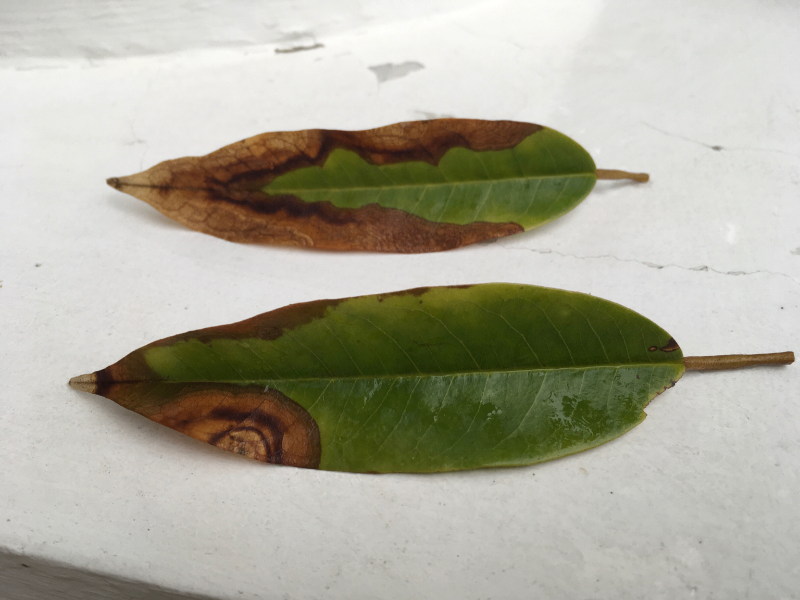
On durian leaves, anthracnose typically appears as small brown or black spots scattered on the leaf surface. These spots gradually expand and merge into large burnt patches, often surrounded by a yellow halo. This is a typical symptom of the infection and development of Colletotrichum in leaf tissues (Agrios, 2005).
According to plant pathology studies, lesions are usually circular or irregular, and under high humidity conditions, spore-producing structures (acervuli) may appear in the center of lesions. This feature helps distinguish anthracnose from nutrient deficiency symptoms, which lack such structures (Hyde et al., 2009).
When the disease becomes severe, the increase in damaged leaf area reduces photosynthesis, affecting overall plant growth and increasing the risk of leaf drop (Bailey & Jeger, 1992).
4. Identification of anthracnose on durian flowers
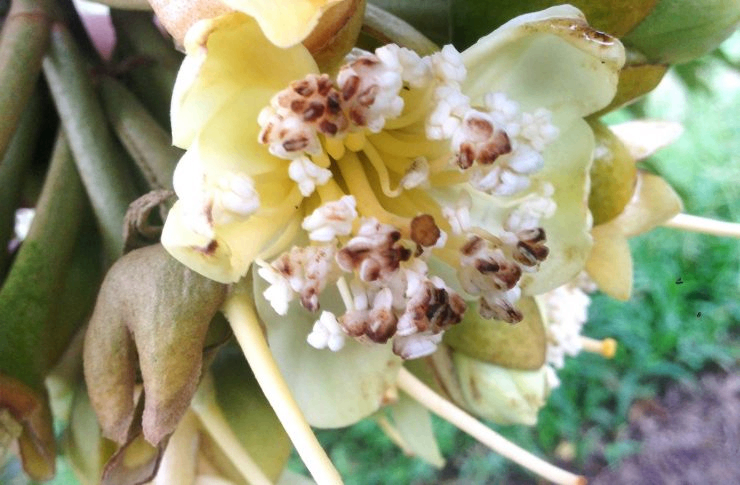
On durian flowers, anthracnose typically manifests as flowers turning dark, drying out, and dropping prematurely, especially under high humidity and frequent rainfall. This is a highly sensitive stage for fungal infection (Agrios, 2005).
Studies show that Colletotrichum can penetrate flower tissues through the epidermis and develop rapidly, causing tissue necrosis and disrupting pollination and fruit set (Hyde et al., 2009).
This results in mass flower drop, reducing fruit set rate and directly affecting yield, particularly in orchards with poor humidity and ventilation management (FAO, 2011).
5. Identification of anthracnose on durian fruits
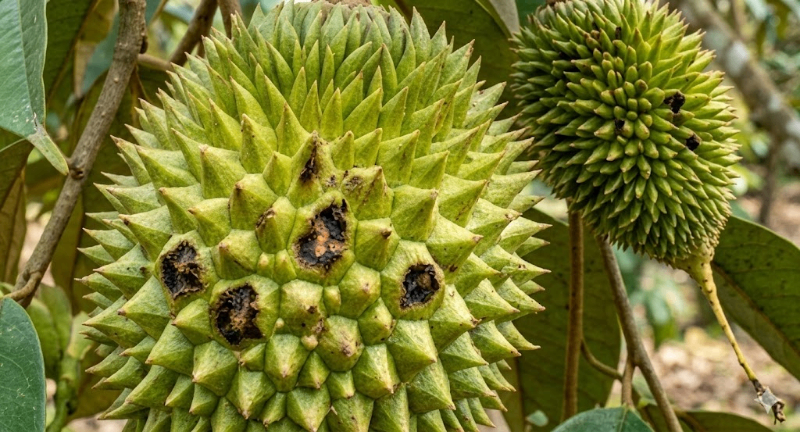
On durian fruits, anthracnose typically appears as small brown or black rot spots on the fruit surface. These lesions expand into sunken areas and can lead to fruit rot under favorable conditions (Hyde et al., 2009).
Postharvest disease studies indicate that Colletotrichum can remain latent on fruits and only develop aggressively when fruits are stressed or under high humidity conditions. This explains why many cases occur after harvest (Bailey & Jeger, 1992).
Lesions are usually circular, sunken, and may show concentric rings—an important feature distinguishing them from bacterial or insect damage (Agrios, 2005).
6. Distinguishing anthracnose from other diseases
Differentiating anthracnose from other conditions is crucial to avoid misdiagnosis, as some symptoms may resemble sunburn or nutrient deficiency. However, studies show that anthracnose is characterized by clearly defined necrotic lesions and may develop spore structures under high humidity (Agrios, 2005).
In contrast, nutrient deficiency symptoms usually spread uniformly across leaves without distinct necrotic spots, while bacterial diseases often produce wet lesions with a characteristic odor (FAO, 2011).
Careful observation of lesion shape and progression over time is essential for accurate diagnosis (Hyde et al., 2009).
7. Solutions
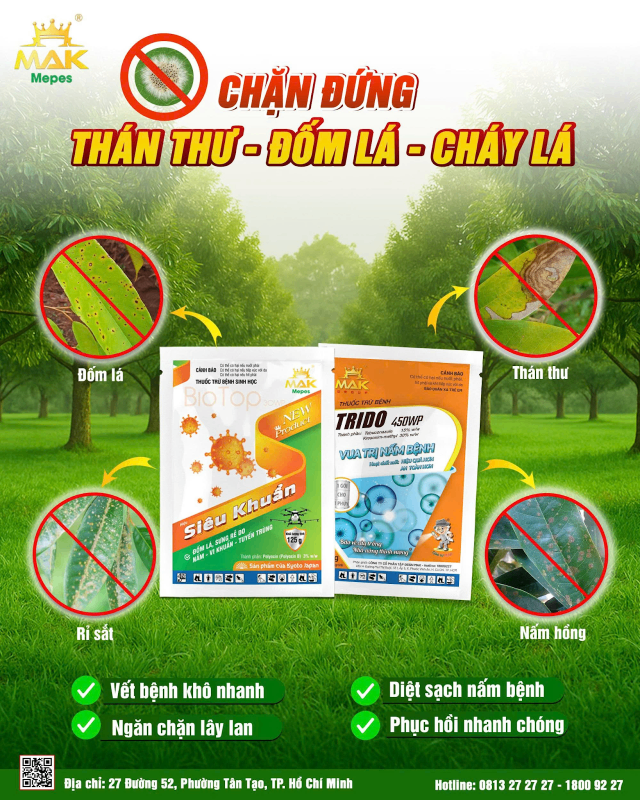
A widely used product combination shared by many growers is: SIÊU KHUẨN, TRIDO 450WP
8. Conclusion
Accurate identification of anthracnose on different parts of the durian plant is a crucial step in effective disease management, as each infected part has a different level of impact on plant growth and yield. Therefore, appropriate approaches should be based on scientific knowledge and practical production experience (FAO, 2011).
By understanding the symptoms and damage mechanisms, growers can proactively detect the disease early and apply timely control measures, thereby minimizing losses and improving cultivation efficiency (Agrios, 2005).
9. Contact
For more information about Siêu Khuẩn, TRIDO 450WP and other MEPES products, or for technical consultation on crop care and protection, please visit: https://www.mepes.vn/ or contact directly via hotline 1800 9227 – 0813 27 27 27 for the best support.