 VI
VI EN
EN
Leaf burn in rice can be caused by bacterial infection or potassium deficiency. Understanding how to accurately identify the cause and apply the right control methods will help farmers protect rice plants, maintain healthy green leaves, and achieve higher yields.
1. Leaf Burn in Rice – A Common Threat During the Rainy Season
Leaf burn in rice is one of the most common and serious problems in rice production today. Under humid weather conditions, unbalanced fertilization, or improper field management, rice leaves may become yellow, dry, and burned starting from the leaf tip.
However, not all cases are caused by disease. The main causes of leaf burn in rice generally come from two different factors:
- Bacterial infection
- Potassium deficiency during plant growth
Correctly identifying the cause of leaf burn is the first step toward effective control and avoiding unnecessary pesticide use.
2. Identifying Bacterial Leaf Burn (Bacterial Leaf Blight)
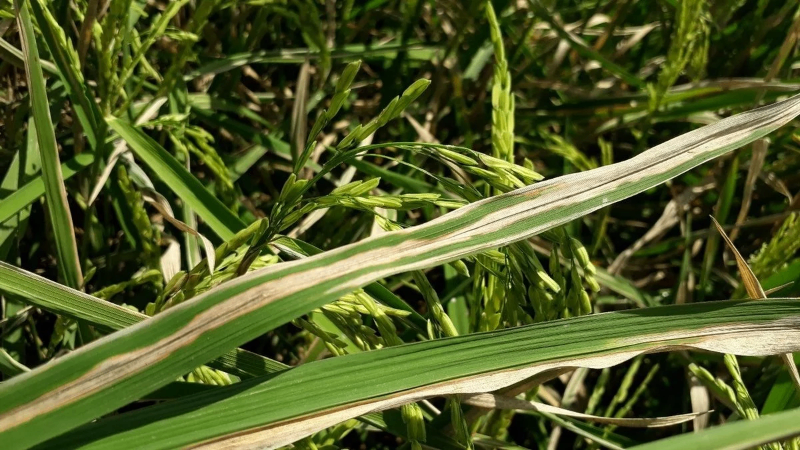
Bacterial leaf burn, also known as bacterial leaf blight, is commonly caused by the bacteriumXanthomonas oryzae pv. oryzae.
Symptoms
- Lesions appear as oil-soaked streaks starting from the leaf margin near the tip, gradually spreading both lengthwise and widthwise.
- The lesions eventually form burned areas along the leaf edges and tips with a light yellow-gray color.
- In severe cases, the lesions spread across the entire leaf blade, causing the leaf to become dry and whitish.
During early morning dew or humid rainy days, small yellow sticky droplets may appear on infected areas. When dry, these droplets may resemble tiny yellow beads.
Severe infections can cause:
- Rapid drying of entire leaves, including the flag leaf
- Poorly filled grains
- Darkened rice husks
Conditions Favoring Disease Development
Bacterial leaf blight develops rapidly under the following conditions:
- Warm and humid temperatures (26–30°C)
- Cloudy weather, frequent rainfall, and fog
- Air humidity above 90%
- Heavy rain and strong winds
Other contributing factors include:
- Excessive nitrogen fertilization with insufficient phosphorus and potassium
- Dense planting that increases humidity within the canopy
- Poor field sanitation, including leftover straw, ratoon rice, or weeds around fields
- Use of susceptible rice varieties
3. Identifying Leaf Burn Caused by Potassium Deficiency
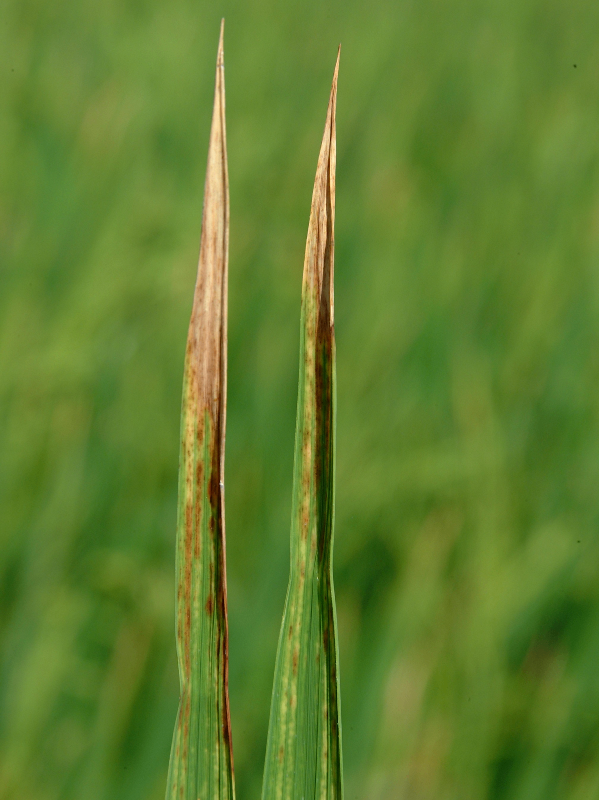
Leaf burn caused by potassium deficiency is not an infectious disease, but a physiological symptom of nutrient deficiency.
Symptoms
- Leaf edges turn yellow and later brown, especially on older leaves.
- Symptoms are most noticeable during the flowering to grain-filling stage.
- Rice plants grow slowly and appear stunted.
- Leaves are upright but narrow, and stems become soft and weak.
Because stems are weak and roots are shallow:
- plants easily lodge during strong winds or heavy rain
Potassium deficiency also reduces nutrient transport from leaves to grains, resulting in:
- Empty grains
- Uneven grain maturity
Causes
- Unbalanced fertilization, such as applying only Urea and DAP without potassium
- Incorrect fertilization timing, especially when potassium is not supplied during the panicle initiation and heading stages
- Acidic, saline, or degraded soils with low potassium retention
- Heavy rainfall or prolonged flooding, which washes potassium away from the root zone
4. Effective Management and Control Solutions
4.1. Solutions for Bacterial Leaf Burn
- Use clean and disease-resistant rice varieties with strong leaf structures.
- Treat seeds before soaking and sowing.
- Maintain appropriate planting density.
Increase organic fertilizer use and avoid excessive nitrogen application. - Apply sufficient phosphorus and potassium fertilizers.
When early symptoms appear, apply bactericides containing active ingredients such as:
- Kasugamycin
- Polyoxin B
- Oxolinic Acid
- Streptomycin
- Copper Hydroxide
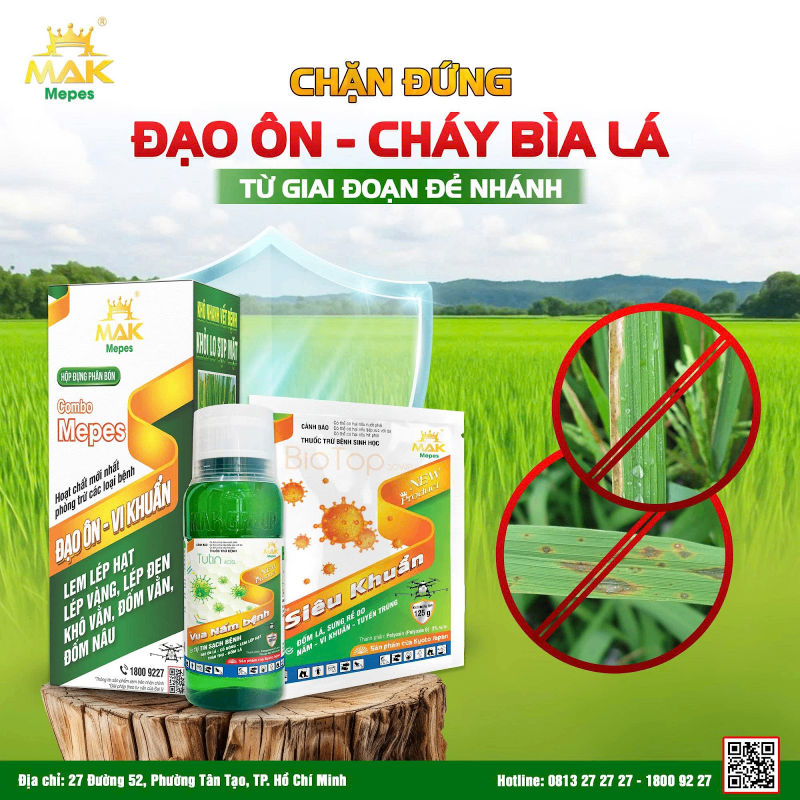
Combination products can also be used, such as VUA NẤM BỆNHKasugamycin and SIÊU KHUẨN (Polyoxin B), which provide strong control against both rice blast and bacterial diseases, helping maintain healthy green leaves.
4.2. Solutions for Leaf Burn Caused by Potassium Deficiency
Soil improvement
- Apply lime and well-decomposed organic fertilizers to improve soil fertility and potassium retention.
Proper potassium fertilization
Apply potassium from land preparation to the pre-heading stage.
Common potassium fertilizers include:
- Potassium chloride (MOP)
- High-potassium NPK fertilizers
- Potassium sulfate (especially suitable for saline or acidic soils)
Foliar nutrition
Apply foliar fertilizers containing potassium combined with micronutrients during key stages:
- panicle initiation
- 7–10 days before and during heading
Products containing readily absorbed potassium, amino acids, boron, and zinc help produce full, bright, and firm grains.
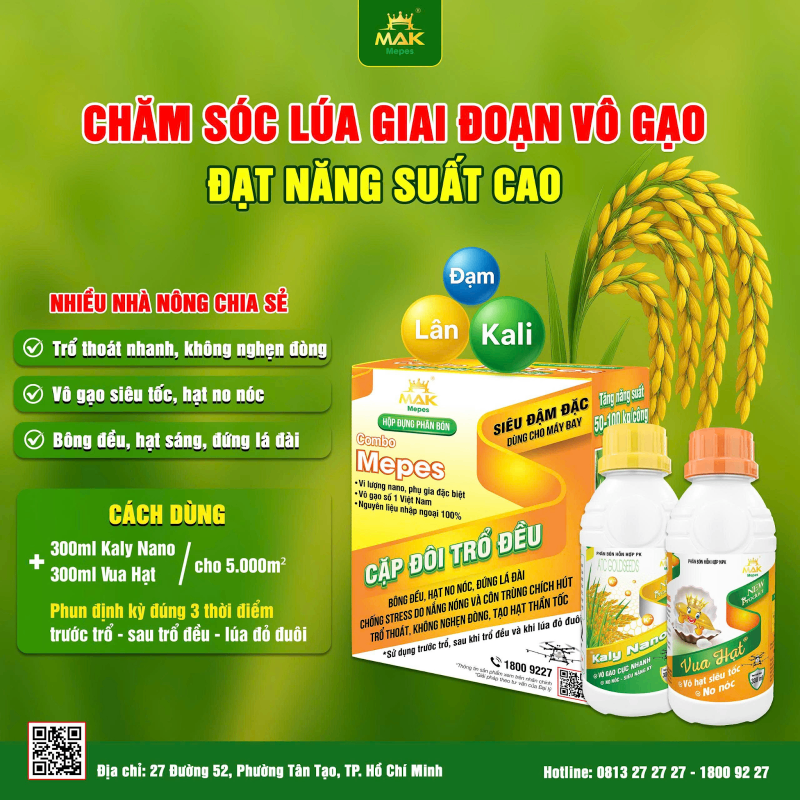
A solution set with high potassium content and balanced macronutrients can help rice plants absorb nutrients quickly and efficiently.
5. Conclusion – The Secret to Keeping Rice Leaves Green and Healthy
To effectively manage leaf burn in rice, farmers should:
- Correctly identify the cause (bacterial infection or potassium deficiency)
- Apply balanced fertilization with increased potassium and silicon
- Use bactericides at the right time and correct dosage
Once farmers understand the nutritional needs of rice plants and the true cause of leaf burn, rice fields can remain green, healthy, and productive with well-filled grains.
6. Contact Information
For more information about VUA NẤM BỆNH, SIÊU KHUẨN, KALY NANO, VUA HẠT, and other products from MEPES, or for technical consultation on crop care and protection, please visit:https://www.mepes.vn/ Or contact the hotline: 1800 9227 – 0813 27 27 27 for the best consultation and technical support. 🌾