 VI
VI EN
EN
Solutions to Reduce Excessive Leaf Growth and Lodging in the Winter–Spring Rice Crop
The Winter–Spring crop often delivers high yields, but it also carries potential risks such as excessive leaf growth, soft stems, and lodging caused by overuse of nitrogen fertilizer or late-season rainfall. This article helps farmers clearly understand the causes and apply effective management solutions to keep rice fields standing strong, ensure uniform heading, and achieve good grain filling.
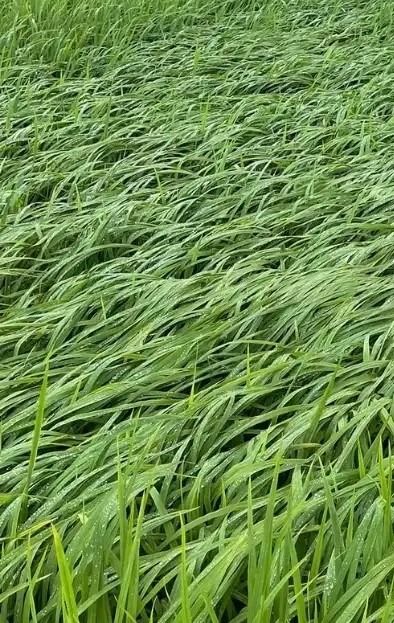
I. Introduction – Why is Winter–Spring rice prone to lodging?
In reality, many Winter–Spring rice fields show the following conditions:
- Excessively lush and dark-green growth
- Long leaves with wide blades that cover the field canopy
- Soft stems with elongated internodes
When exposed to unseasonal rainfall, strong winds, or when the crop enters the heading and grain-filling stages, these fields are highly prone to widespread lodging, leading to:
- Reduced pollination rates
- Poorly filled grains and lightweight kernels
- Difficult harvesting and significant yield losses
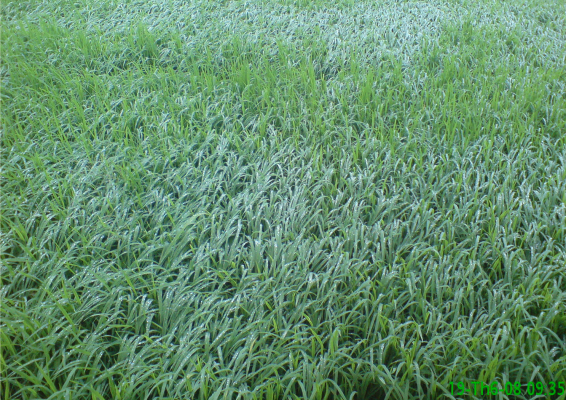
II. Main causes of excessive leaf growth and lodging
Common causes include:
- Excessive nitrogen application during the tillering and panicle initiation stages
- Cool weather and low light intensity, which promote rapid stem elongation
- Rice varieties with weak stems and long internodes
- Acid sulfate soils or soft soil conditions where roots grow shallow
At its core, the problem lies in overly vigorous vegetative growth while reproductive growth fails to keep pace.
III. Early field indicators of lodging risk
Farmers can identify the risk of lodging through the following signs:
- Unusually dark-green rice leaves
- Long leaves that droop downward
- Soft stems that bend easily when gently pressed by hand
- Dense canopies where sunlight has difficulty reaching the base of the plants
If these signs are observed, timely intervention is necessary.
IV. Consequences of not taking early action
- Lodging at the heading stage leads to high spikelet sterility and yield reduction
- Lodging during grain filling reduces grain quality and overall profit
- Creates favorable conditions for fungal diseases to develop
- Makes harvesting difficult and increases production costs
Many rice fields appear lush and healthy early in the season but suffer yield losses at the end due to neglecting this critical stage.
V. Integrated management solutions to reduce lodging
5.1 Agronomic practices
- Apply appropriate seeding rates (80–120 kg/ha depending on the method) to promote strong plants, firmer stems, and deeper root systems.
- Use balanced fertilization with N–P–K; limit excessive nitrogen (urea) and increase potassium (K) and silicon (Si) to strengthen stems and thicken internode walls.
- Manage water properly. Drain the field mid-season (after tillering and after panicle initiation fertilization) for about 5–7 days, and maintain a moderate water level (1–3 cm) during other stages to improve plant sturdiness and root development.
5.2 Monitoring and preventive measures
- Regularly scout fields to monitor crop conditions.
- Assess stem strength and leaf length.
- Intervene early; do not wait until heading to take action.
5.3 Chemical measures (key technical solution)
In fields at risk of excessive leaf growth, soft stems, and lodging, farmers may apply a combined solution:
Cứng Như Bi (active ingredient: Prohexadione Calcium) + Makbi 60SC, as follows:
Role of Prohexadione Calcium
- Suppresses excessive height growth and shoot elongation
- Shortens internodes and thickens cell walls
- Strengthens stems and improves standability
- Shifts plant growth from vegetative to reproductive stages
Role of Makbi (secondary and micronutrients)
- Supplies calcium, magnesium, boron, zinc, silicon, and other elements
- Enhances stem flexibility and mechanical strength
- Supports nutrient transport, panicle development, and grain filling
This combination helps to:
- Reduce excessive leaf growth
- Increase stem strength
- Lower the risk of lodging
- Maintain an open canopy and ensure uniform heading
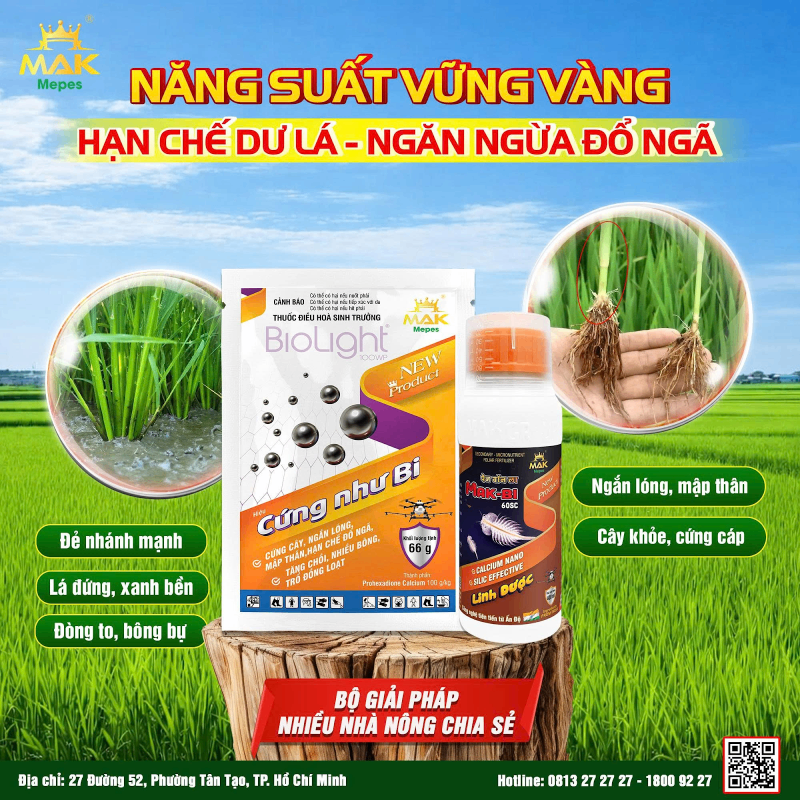
VI. Application guidelines (for reference)
- Timing: During the tillering stage (20–30 DAS*) and after the crop has headed uniformly.
Notes:
- Apply products according to the “4R principles” (right product, right dose, right time, right method).
- Follow the manufacturer’s recommendations strictly.
*DAS: Days After Sowing
VII. Common mistakes farmers often make
- Waiting until the crop is close to heading before taking action
- Assuming that very green rice is always good and requires no intervention
- Applying nitrogen late to “feed the panicle,” which instead softens the stems
- Addressing only one factor while neglecting secondary and micronutrient nutrition
VIII. Conclusion
To achieve high yields in the Winter–Spring season, rice does not only need to be green and vigorous—it must remain standing strong until harvest. Proper growth management at the right time, controlling excessive leaf growth, and increasing stem strength are key factors that help ensure:
- Uniform heading
- Well-filled grains
- Easy and efficient harvesting
Early intervention, correct timing, and the right solutions will help farmers avoid lodging risks and protect overall yield.
IX. Contact Information
For more detailed information about CỨNG NHƯ BI, MAKBI, and other products from MEPES, or if you need technical consultation on crop care and protection, customers may visit the website:https://www.mepes.vn/ or contact us directly via 1800 9227 – 0813 27 27 27 for the best consultation and support.