 VI
VI EN
EN
Weedy rice and weeds in rice fields are a major concern for many farmers. Without proper early-season management, rice crops face intense competition for nutrients, leading to reduced yields and higher production costs.
This article shares effective solutions for controlling weedy rice and weeds that are safe for rice and suitable for application right from the beginning of the season.
I. Current situation of weedy rice and weeds in rice fields
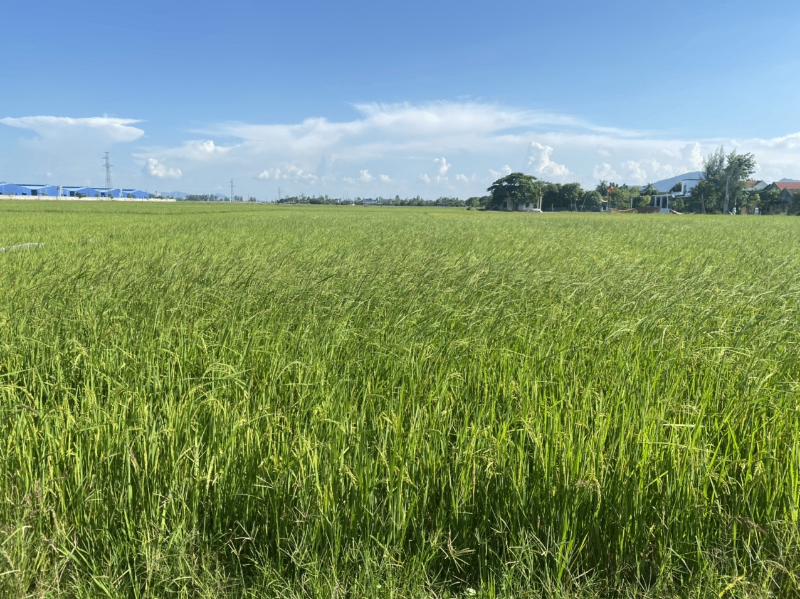
At present, the occurrence of weedy rice in rice fields is becoming increasingly common due to:
- Continuous direct seeding over many seasons
- Use of rice seed contaminated with weedy rice seeds
- Weed control applied at the wrong growth stage
Many farmers face the following problems:
- Rice fields heavily infested with weedy rice
- Herbicide applications that fail to provide complete control
- Repeated weed resurgence, resulting in higher costs
The main causes are late intervention and the lack of an integrated weedy rice management approach.
II. What is weedy rice? Why is it so difficult to control?
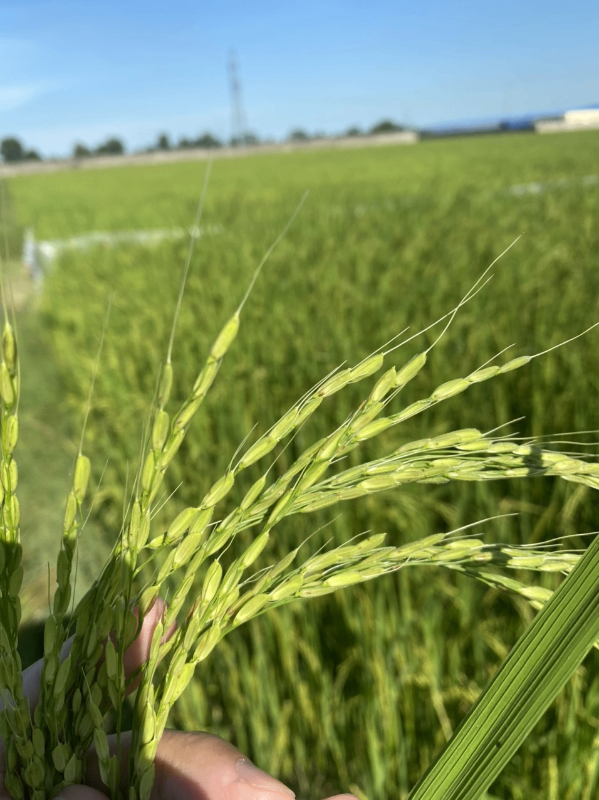
Weedy rice is a type of wild rice that closely resembles cultivated rice, making it difficult to distinguish at early growth stages.
Characteristics of weedy rice:
- Germinates at the same time as cultivated rice
- Grows vigorously
- Heads early and sheds a large number of seeds
- Competes very strongly for nutrients
If weedy rice is not controlled early in the season, it will leave behind seeds that continue to infest fields in subsequent crops.
III. Weeds in rice fields and their impacts
Common weeds found in rice fields include:
- Barnyard grass (Echinochloa spp.)
- Feather grass / sprangletop
- Goosegrass / rice flat sedge
- Sedges such as Cyperus spp.
Impacts of weeds:
- Compete for light and nutrients
- Make fields dense, increasing pest and disease pressure
- Reduce yields by 20–50%
IV. The golden timing for controlling weedy rice and weeds
To manage weedy rice and weeds effectively, farmers must apply control measures at the right time:
- 3 days before sowing and 0–3 days after sowing: pre-emergence stage
- 5–10 days after sowing: early post-emergence stage
After 15 days from sowing, controlling weedy rice becomes:
- Less effective
- More costly
- More likely to affect the cultivated rice crop
V. Integrated early-season management solutions for weedy rice and weeds
5.1 Agronomic practices
- Prepare the land thoroughly and level the field
- Use clean, certified rice seed
- Apply appropriate seeding density
- Manage water properly after sowing
5.2 Long-term preventive measures
- Do not allow weedy rice to head and shed seeds
Collect and remove weedy rice after harvest - Avoid using the same rice variety continuously over many seasons
5.3 Chemical measures – effective solutions for weedy rice control
When fields are at risk of weedy rice and weed infestation at the early stage, farmers may apply:
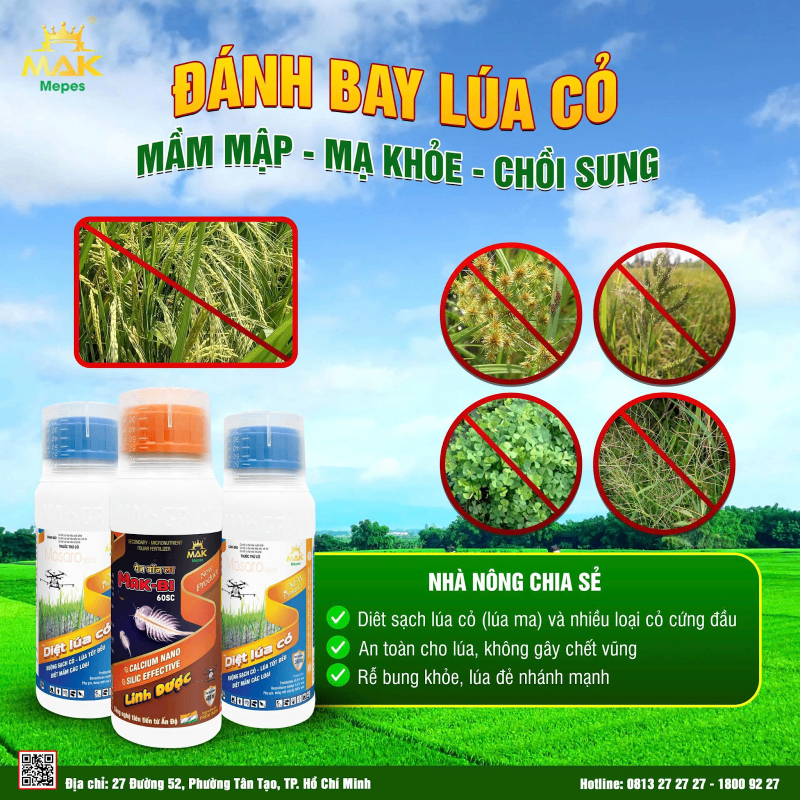
Weedy rice control (49.5% Pretilachlor + 5.5% Bensulfuron methyl) + Makbi
Effects of Pretilachlor + Bensulfuron methyl
- Controls weedy rice and multiple weed groups
- Highly effective at pre- and early post-emergence stages
- Helps keep rice fields weed-free early and limits reinfestation
Role of Makbi (secondary and micronutrients)
- Supplies Ca, Si, Zn, Bo, Mn, and other elements
- Promotes strong root development and early tillering
- Reduces crop stress after weed control
This solution provides safe weedy rice control, promotes vigorous rice growth, and helps reduce production costs.
VI. Safe application guidelines
- Timing: 3 days before sowing and within 3 days after sowing
- Field conditions: Adequate moisture and a well-leveled field
- Do not spray late when weeds are already large
- Do not overuse high application rates
VII. Common mistakes that worsen weedy rice infestation
- Applying herbicides too late
- Confusing weedy rice with cultivated rice
- Repeated use of a single active ingredient
- Assuming weed control only needs to be done once
VIII. Conclusion
Early-season management of weedy rice and weeds is the key to achieving rice fields that are:
- Weed-free
- Uniform in growth and development
- Lower in production costs
- Protected for sustainable yields
Early action, correct timing, and a systematic approach will help farmers overcome weedy rice problems in the long term.
IX. Contact Information
For more detailed information about DIỆT LÚA CỎ, MAKBI, and other products from MEPES, or if you require technical consultation on crop care and protection, customers may visit https://www.mepes.vn/ or contact us directly at 1800 9227 – 0813 27 27 27 for professional advice and the best support.