 VI
VI EN
EN
Rice lodging is one of the most common concerns for rice growers during every cropping season. When rice plants lodge, harvesting becomes more difficult, grain yield decreases, the percentage of unfilled grains increases, rice quality declines, and crops become more vulnerable to pests and diseases.
Many farmers believe that rice lodging is mainly caused by heavy rain, strong winds, or storms. While these environmental factors certainly contribute, they are not the root cause. In most cases, lodging results from poor crop management during the early stages of plant development.
For this reason, applying effective rice lodging prevention solutions early—especially during the tillering stage—helps plants develop balanced growth, stronger stems, healthier roots, and better resistance to lodging throughout the growing season.
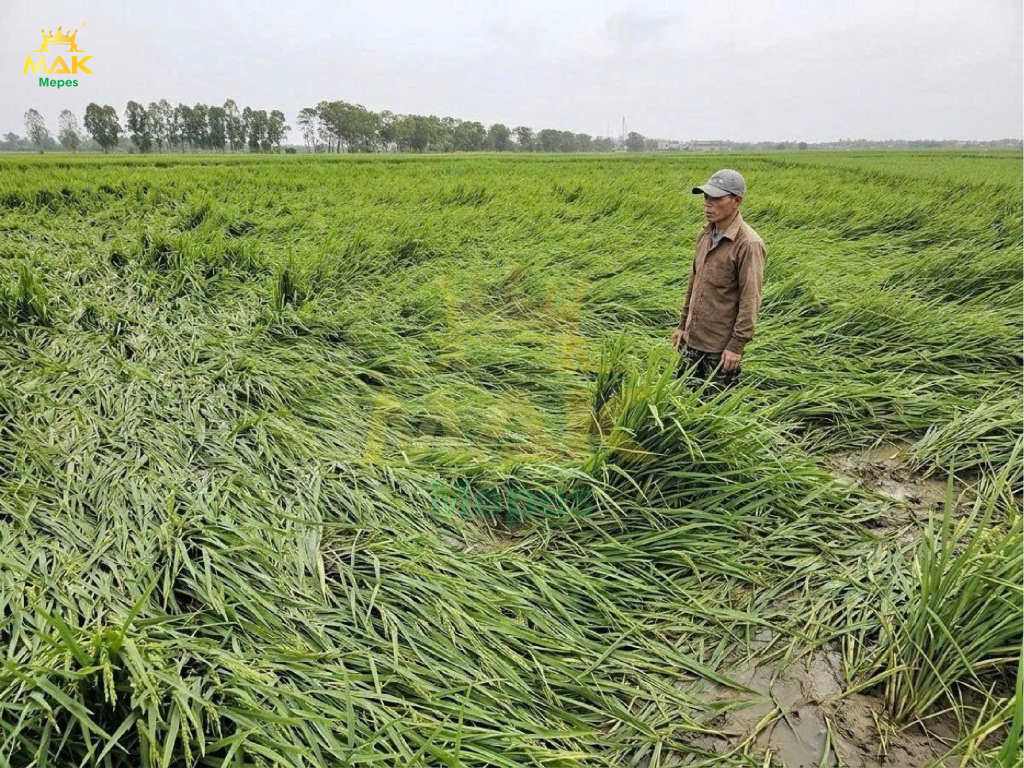
Why Does Rice Lodge Easily?
Rice lodging commonly occurs during the panicle initiation, heading, or pre-harvest stages when panicles become heavier while stems lack sufficient strength to support them.
The most common causes include:
1. Excessive Nitrogen Fertilization
Nitrogen promotes rapid vegetative growth and greener foliage. However, excessive nitrogen application can result in:
- Excessive plant height
- Longer internodes
- Thinner cell walls
- Soft and weak stems
- Higher susceptibility to lodging during heavy rain or strong winds
This remains one of the most common causes of lodging in modern rice production.
2. Poor Root Development
A healthy root system serves as the foundation that keeps rice plants upright.
When roots are:
- Shallow
- Weakly developed
- Less efficient in absorbing water and nutrients
plants are much more likely to be uprooted or lodged under unfavorable weather conditions.
3. Excessively Long Internodes
The longer the distance between stem nodes, the taller and less balanced the plant becomes.
Long internodes increase the likelihood of stem bending or breaking once grain filling begins and panicles gain weight.
4. Overly Dense Seeding
Dense planting creates intense competition for sunlight.
As a result, rice plants grow taller in search of light, producing thinner and weaker stems with lower resistance to lodging.
5. Adverse Weather Conditions
Environmental factors such as:
- Prolonged rainfall
- Thunderstorms
- Strong winds
- Typhoons
- Waterlogged and softened soil
significantly increase the risk of lodging, particularly when plants lack sufficient stem strength.
The Impact of Rice Lodging
Rice lodging affects much more than field appearance—it can cause substantial economic losses.
Reduced Grain Yield
When rice plants lodge:
- Photosynthesis decreases.
- Nutrient transport to developing grains is reduced.
- The percentage of empty or unfilled grains increases.
Yield losses can be significant, especially if lodging occurs before or during the grain-filling stage.
Lower Grain Quality
Lodged rice often experiences:
- Pre-harvest sprouting
- Mold development
- Grain discoloration
These issues reduce market value after harvest.
Increased Disease Pressure
Lodged plants remain close to the water surface, creating favorable conditions for diseases such as:
- Dirty panicle disease
- Rice neck blast
- Sheath blight
- Various fungal infections
Difficult Harvesting
Lodging also causes:
- Reduced harvesting efficiency
- Greater grain losses
- Longer harvesting time
- Increased labor costs
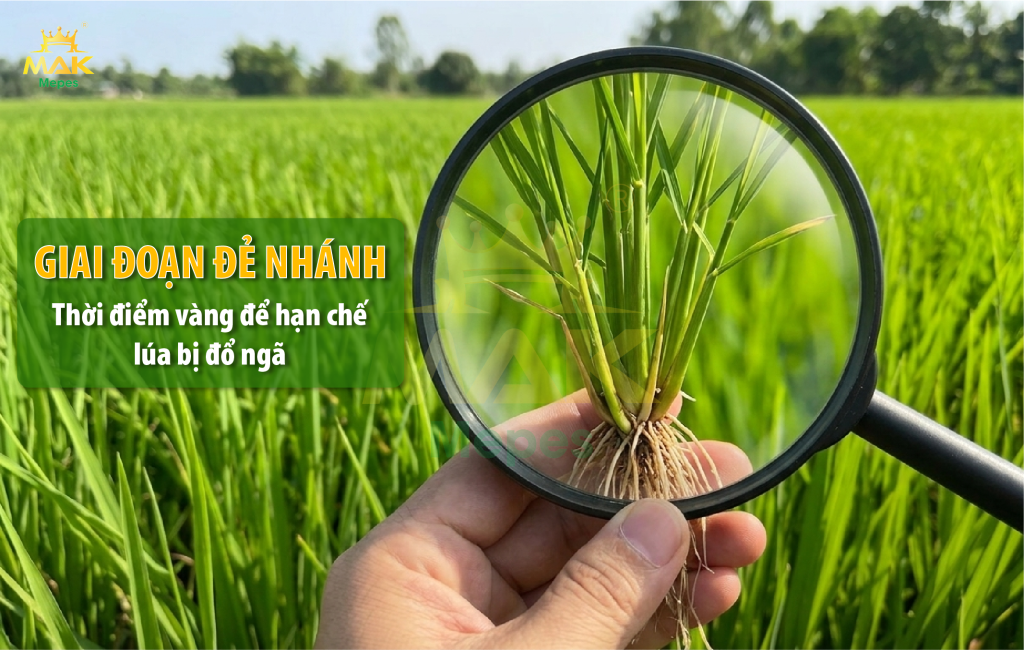
Tillering Stage – The Golden Opportunity to Prevent Rice Lodging
Many farmers only begin taking preventive measures when rice plants have already grown tall or are approaching heading. Unfortunately, this is often too late.
Agricultural specialists recommend implementing stem-strengthening practices during the tillering stage.
This growth stage determines:
- Productive tiller numbers
- Root system development
- Stem thickness
- Internode length
- Overall plant vigor and stress tolerance
Proper management during tillering establishes a solid foundation for the remainder of the crop cycle.
Best Practices to Strengthen Rice Plants and Reduce Lodging
Apply Balanced Fertilization
Avoid excessive nitrogen application.
Instead, provide balanced nutrition including:
- Nitrogen (N)
- Phosphorus (P)
- Potassium (K)
- Silicon (Si)
- Calcium (Ca)
- Magnesium (Mg)
Balanced nutrition helps strengthen cell walls and produces sturdier stems.
Proper Water Management
Maintaining appropriate water levels encourages:
- Deeper root growth
- Reduced surface rooting
- Improved lodging resistance
Maintain Appropriate Plant Density
Avoid excessive seeding rates.
Well-spaced rice plants receive:
- Better sunlight penetration
- Less excessive elongation
- Higher photosynthetic efficiency
- Lower disease pressure
Apply Plant Strengthening Solutions Early
Many growers now incorporate plant growth management programs to:
- Control excessive plant height
- Shorten internodes
- Promote stronger root development
- Increase stem strength
Timely application greatly reduces the risk of lodging.
A Rice Lodging Prevention Program Trusted by Many Farmers
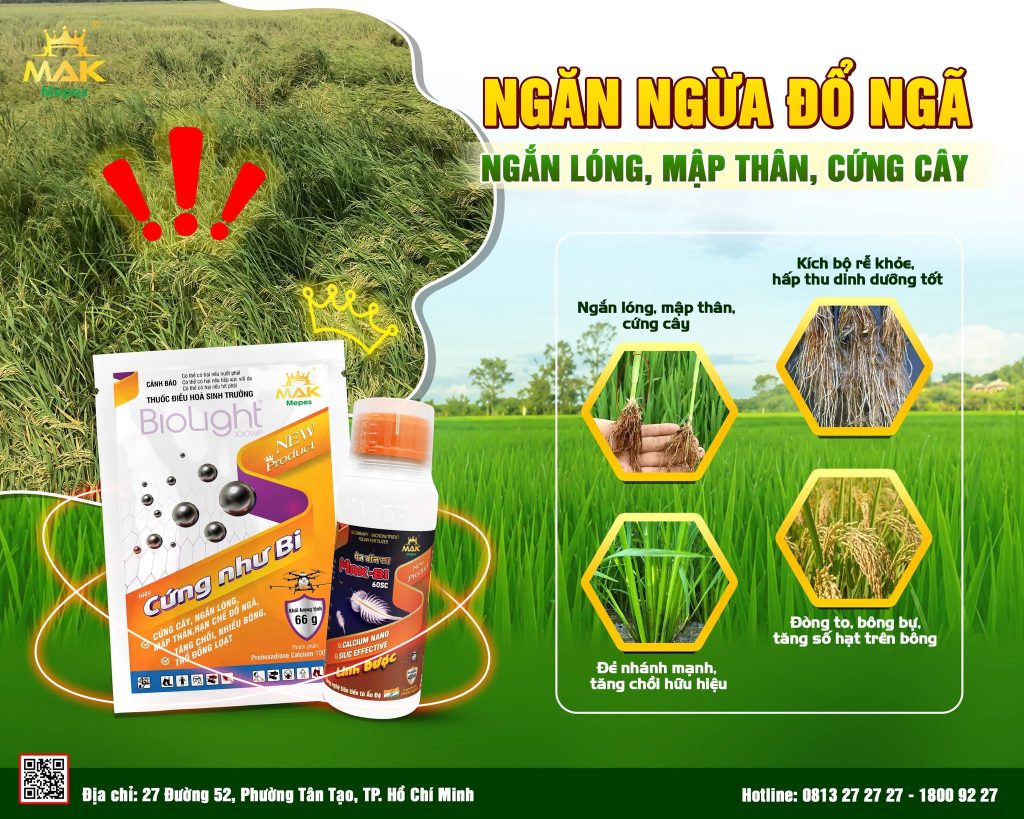
To promote balanced growth and improve lodging resistance, many rice growers combine CỨNG NHƯ BI with MAK-BI 60SC as part of their rice crop management program.
This combination supports vigorous plant development from the early growth stages, creating a stronger foundation throughout the entire growing season.
Farmers have reported several key benefits, including:
- Shorter internodes that reduce excessive plant height
- Thicker and stronger rice stems
- Improved standability
- Healthier root development
- Enhanced nutrient uptake
- Thicker, more upright leaves
- Improved photosynthetic efficiency
- Stronger tillering with more productive tillers
- Better support for panicle development and grain filling
- Reduced lodging risk during heavy rain, strong winds, or under heavy panicle weight
This integrated solution has been widely adopted in many rice-growing regions to help maintain stable crop growth while minimizing end-of-season yield losses.
Recommended Application Timing
For the best performance, apply the products during the following growth stages:
- Tillering stage: Supports canopy structure, root development, and stem strengthening.
- After full heading: Helps maintain plant stability while supporting grain filling.
**Note: For Japanese rice varieties, apply only half of the recommended rate of CỨNG NHƯ BI, following technical recommendations to match the growth characteristics of these cultivars.
Prevention Is Always Better Than Recovery
Once rice has lodged, complete recovery is extremely difficult.
Instead of waiting until plants become too tall or unfavorable weather arrives, farmers should establish a comprehensive crop management program from the beginning of the season.
Combining the following practices:
- Balanced fertilizer management
- Proper irrigation
- Appropriate seeding density
- Timely application of stem-strengthening solutions
helps rice plants develop stronger roots, sturdier stems, and significantly lower lodging risk, ultimately leading to higher yields and improved harvest quality.
Conclusion
Rice lodging is one of the leading causes of yield loss and increased production costs in rice farming. Fortunately, it can be effectively managed through early intervention, particularly during the tillering stage.
Developing a strong root system, thicker stems, shorter internodes, and a balanced canopy enables rice plants to withstand adverse weather conditions while improving panicle development, grain filling, and overall harvest quality.
If you need professional advice on rice crop management or would like to learn more about using CỨNG NHƯ BI together with MAK-BI 60SC, please contact the technical team at Mak Mepes. Our specialists will recommend the most suitable program based on your rice variety and growth stage.
————————
MULTINATIONAL HIGH-TECH SCIENCE JOINT STOCK COMPANY
Website: https://mepes.vn/en/homepage/
TikTok: www.tiktok.com/@alogiaosumak
Hotline: (+84) 912 006 006