 VI
VI EN
EN
1. Quick Summary
“Ant nest” leaf blight is one of the most serious diseases in durian, reducing photosynthesis, causing leaf drop, and directly affecting yield.
The disease develops strongly under high humidity and dense canopy conditions.
The most effective solution is integrated management, including:
- Cultural practices
- Biological methods
- Chemical control
2. Search Intent Analysis
- People searching for this topic are usually:
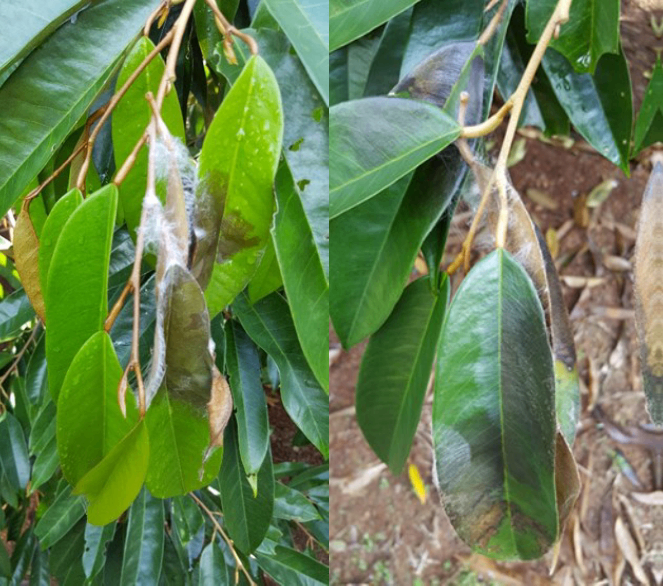
- Facing leaf burn symptoms where leaves stick together like “ant nests”
- Looking for the exact cause
- Needing fast and effective solutions
👉 Key insight:
- It’s not just about “which chemical to use”
- → But understanding the disease mechanism for long-term control
3. What is Durian “Ant Nest” Leaf Blight?
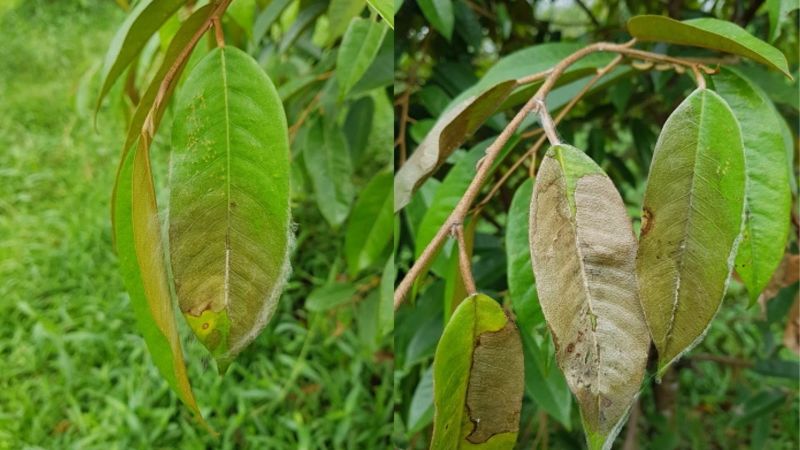
A key characteristic of the disease is the strong development of fungal mycelium on leaf surfaces, binding leaves together into clusters resembling ant nests—hence the common name used in production.
⚠️ Important note:
Ants are not the primary cause, but may indirectly contribute to spreading the disease.
4. Symptoms and Damage Mechanism
The disease usually starts on older leaves, especially in the lower canopy, then spreads upward under favorable conditions.
Symptoms include:
- Small burnt spots at early stage
- Expanding lesions forming large patches
- Leaves dry out and stick together due to fungal growth
Research shows that increasing leaf damage reduces photosynthesis, directly affecting plant growth and yield.
Damage mechanism:
- Penetration through leaf epidermis
- Mycelial growth on leaf surface
- Enzyme secretion that breaks down leaf tissue
👉 Result: leaf burn → early leaf drop → weakened tree → reduced fruit set
5. Causes and Favorable Conditions
The disease develops strongly when multiple factors combine:
High humidity & rainy weather
- Optimal humidity: 80–90%
- Temperature: 25–32°C
- Common during rainy seasons in Vietnam
Dense canopy
- Poor air circulation
- Lack of pruning
Role of insects (ants)
- Ants may carry fungal spores or create favorable conditions for fungal growth
→ Accelerating disease spread
Nutrient imbalance
- Excess nitrogen
- Potassium deficiency
→ Makes leaves softer and more susceptible
6. Integrated Management Solutions (IPM Approach)
Effective control requires Integrated Pest Management (IPM), not just chemical use.
1. Cultural Practices
Pruning to create an open canopy is a key factor in reducing humidity in the orchard, thereby limiting fungal development. At the same time, infected leaves should be collected and destroyed to reduce infection sources.
2. Ant and insect management
Since ants can contribute to disease spread, controlling their population in the orchard is necessary to limit the rate of infection.
3. Nutrient management
Nutrients should be balanced:
- Increase Potassium (K) and Calcium (Ca) to strengthen leaves
- Reduce Nitrogen (N) during the rainy season
👉 This is often overlooked but very important
4. Biological control
Using products containing Trichoderma helps:
- Suppress pathogenic fungi
- Improve soil microbiota
5. Chemical control
Under severe disease conditions, crop protection products with active ingredients such as:
- Kasugamycin
- Hexaconazole
- Azoxystrobin
Below is a combined solution of these three active ingredients, reported effective by many farmers:
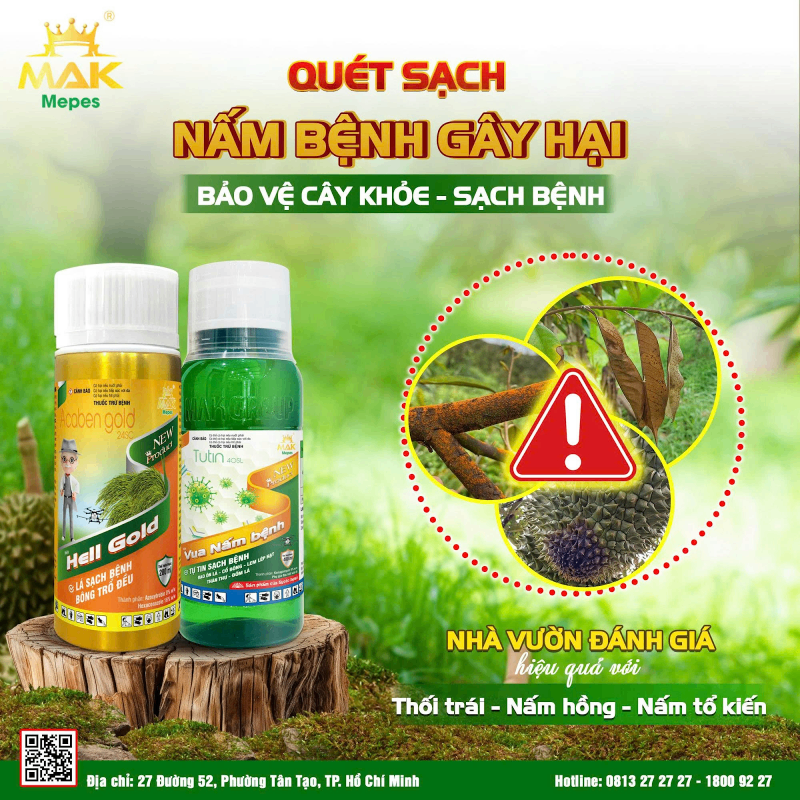
Principles:
- Spray early when symptoms first appear
- Rotate active ingredients to avoid resistance
7. Practical management process in production
Early stage (when disease just appears):
- Remove infected leaves
- Apply first spray
After 5–7 days:
- Apply second spray
- Combine with nutrient supplementation while limiting nitrogen to reduce fungal development
Long-term maintenance:
- Regular pruning
- Preventive spraying before the rainy season
8. Summary table
| Factor | Cause | Solution |
| Humidity | Heavy rain | Improve ventilation |
| Infection | Fallen leaves | Clean up |
| Ants | Spread | Control insects |
| Nutrition | Excess nitrogen | Balance nutrients |
9. FAQ – Frequently Asked Questions
Can this disease be completely controlled?
👉 It can be effectively managed if the correct integrated process is applied
Is periodic spraying necessary?
👉 Yes, especially during the rainy season
Are ants the main cause?
👉 No, ants only assist in spreading the disease
10. Conclusion & CTA
Durian “ant nest” leaf blight is a complex disease caused by the interaction between pathogens and environmental conditions. Therefore, the most effective approach is not simply “treatment”, but integrated management based on scientific principles and real production practices.
- When applied correctly:
- Disease can be reduced by 70–90%
- Tree health improves
- Yield stabilizes in the long term
11. Contact Information
For more information about Vua Nấm bệnh, Hell Gold and other MEPES products, or for technical consultation on crop care and protection, customers can visit the website:https://www.mepes.vn/ or contact directly via hotline 1800 9227 – 0813 27 27 27 for the best support.